dressed
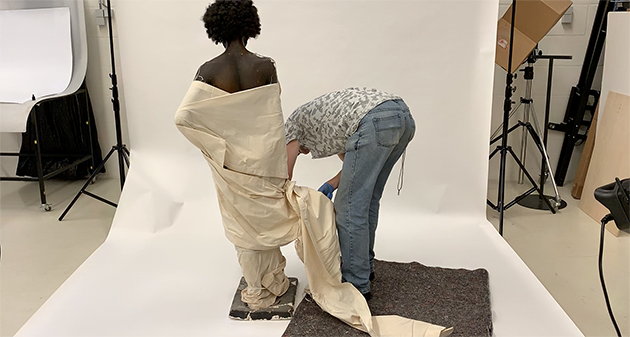
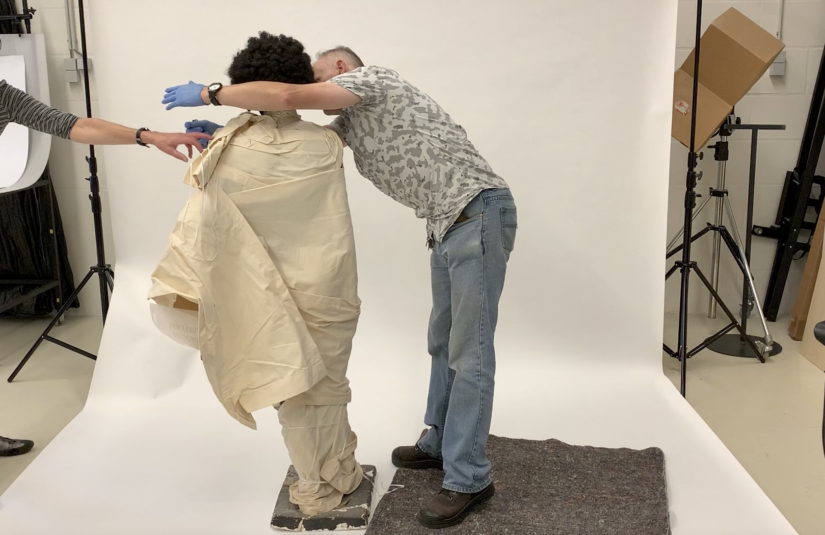
Dressed is a film that follows the preparation of a life-size museum figure from the Wereldmuseum Amsterdam for a photoshoot. The figure was commissioned by the museum in the 1920s and made by Kees Smout within a context shaped by colonial collecting practices and traditions of anthropological display and photography. It has been stored in the depot since the 1960s. It’s considered part of the museum inventory as a prop was not formally registered and remained in a broom closet. In 2020, at Blokland’s request, the figure was temporarily removed from this space in order to register its material condition. To make this possible, the layers of protective cloth not originally belonging to the figure have to be carefully removed. The camera remains close to the process: hands carefully unwrap the figure, adjusting its posture. What precedes the photograph is the exposure of the figure’s body, which starts to carry the weight of what it means to be exposed .
This act of preparation carries a level of unease in witnessing it; even though the figure is a plaster copy of a human shape, it begins to evoke something of a human presence within the relationship of care. At the same time, the figure bears traces of earlier representational systems of violence, where bodies were staged and fixed according to stereotypical and anthropological frameworks. By focusing on this transitional moment, it exposes the instability of representation, as in the unfolding process not only the figure but also those who handle the process become visible, both situated within the tension of institutional frameworks that guide and limit their action, a role grounded in forms of care and ownership. As the figure, once commissioned and displayed by the museum, has since the 1960s been stored away and become absent to audiences, the work enters into a dialogue with the institution’s own processes of visibility and disappearance. It reflects on how such figures that were once produced within colonial and anthropological modes of representation continue to exist within museum structures, shaped by shifting relations between care, visibility, and the body.
specials thanks to
The Netherlands Organization for Scientific Research (NWO) , Research Center for Material Culture,
Special to Harm Linzen ,Liza Swaving , Irene de Groot , Richard van Alphen and Wayne Modest